

Accessibility
The Musée des Augustins is open to everyone.
The Musée des Augustins is committed to being a venue accessible to all by implementing a universal accessibility approach. Since 2019, major refurbishment works have transformed the site to ensure a smooth visitor experience.
Admission to the museum is free for people with disabilities (on presentation of proof of disability), as well as for one accompanying person per disability card holder.
On the forecourt, there is a priority queue for people with disabilities to minimise their waiting time. As soon as you enter, there is a priority ticket office to welcome and provide information to people with specific needs.
Référent handicap : Laure Morand
Specific information
Click on the image that applies to you to view the relevant information.
Reduced mobility
Visual impairments
Hearing impairment

Mental, psychological and cognitive disabilities

LSF audience

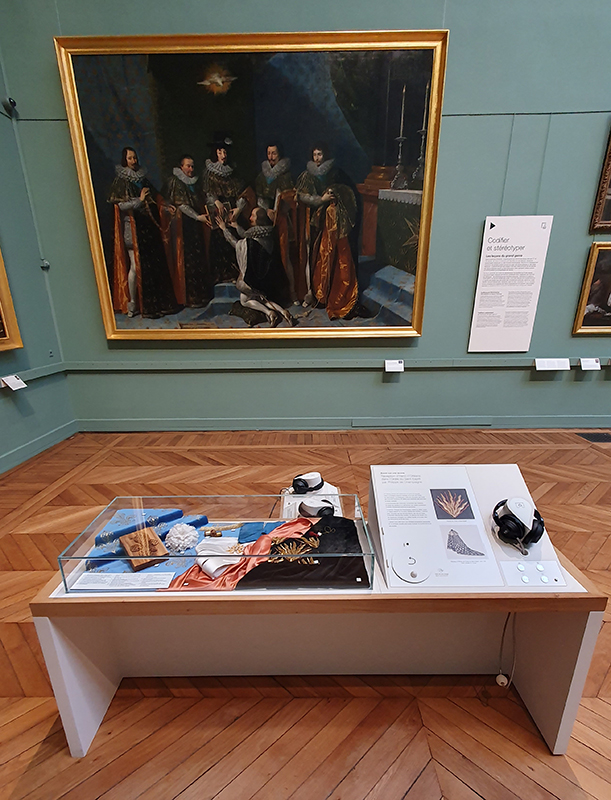
Le parcours multisensoriel
Ce parcours, pensé en accessibilité universelle, permet à tous les visiteurs de s’approprier une sélection d’œuvres du musée. Il propose de découvrir les techniques des artistes et l’histoire singulière de nos collections.
Ces différents dispositifs sensoriels sont constitués d’une piste audio immersive, d’informations simples et d’éléments tactiles. Leur ergonomie est pensée pour tous les usagers.
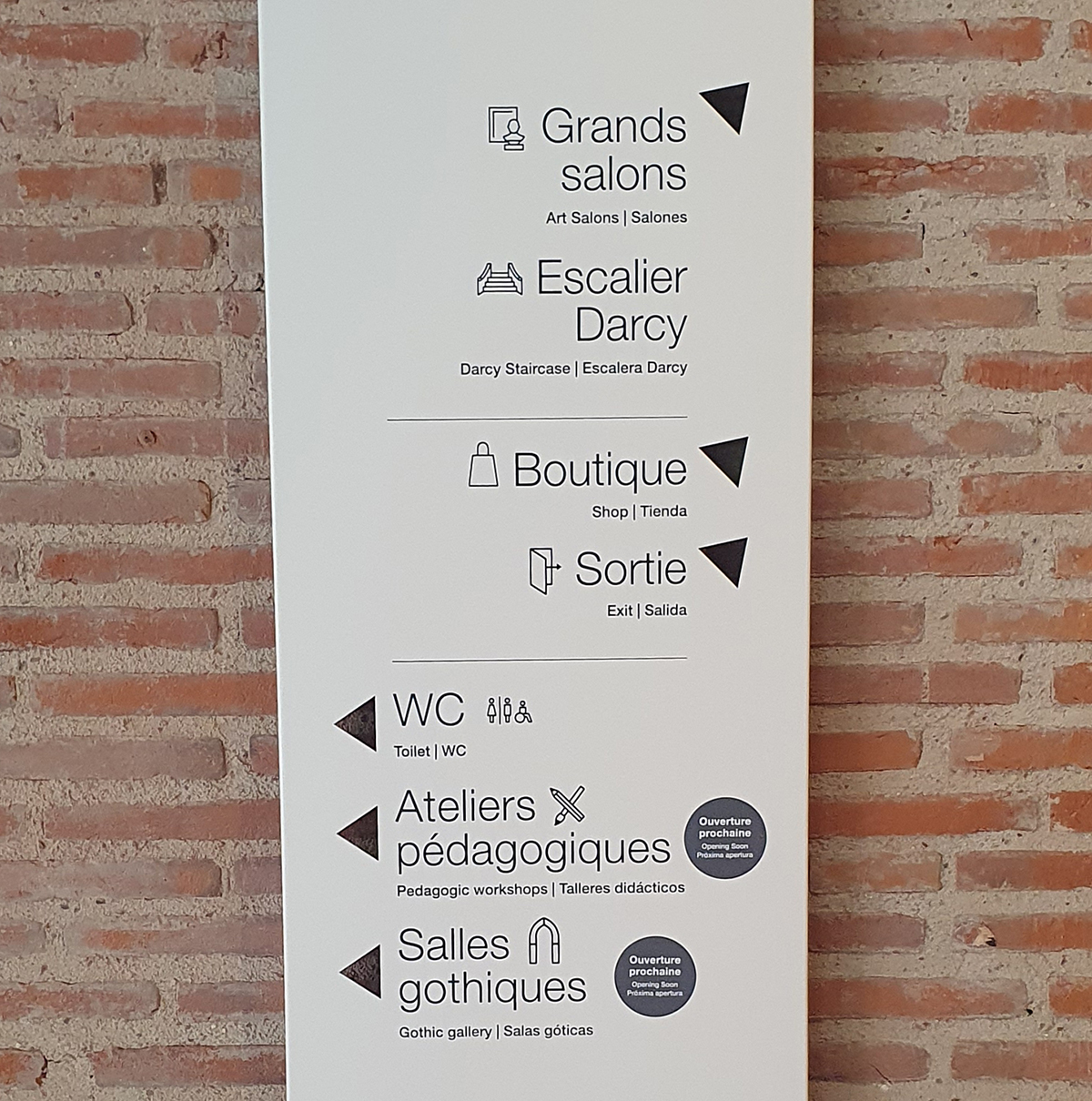
Une signalétique adaptée
Toute la signalétique du musée prend en compte les règles essentielles de l’accessibilité (typographie, contraste visuel, taille des caractères).
Chaque espace du musée est identifié par un pictogramme sur le plan et dans la signalétique directionnelle.
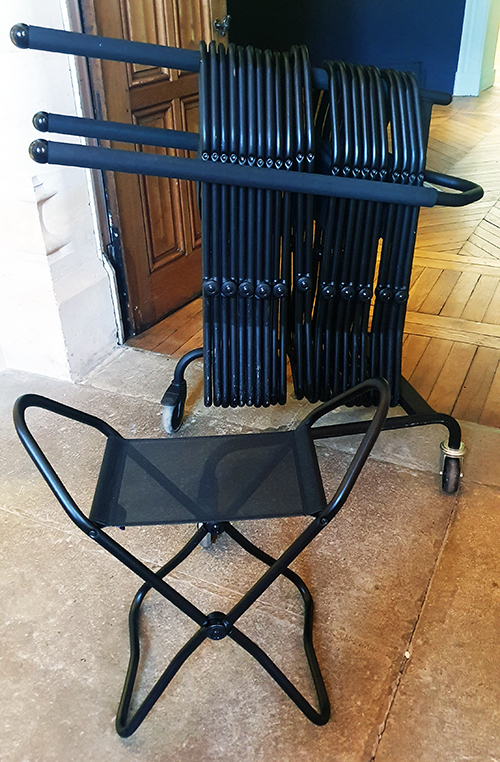
Des sièges pliants sont en libre accès dans l’ensemble du parcours de visite.
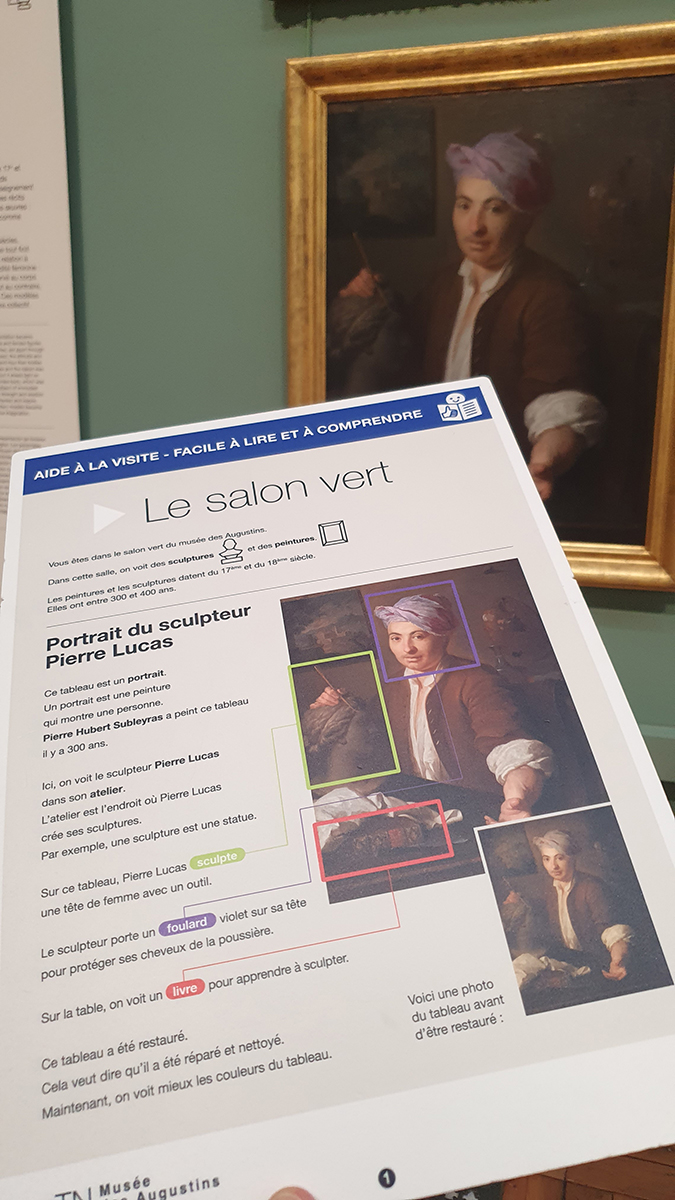
Des informations faciles à lire et à comprendre (FALC)
Retrouvez dans le musée des informations faciles à lire et à comprendre (FALC) sur les panneaux et dans les fiches de salle.
Des sièges pliants sont en libre accès dans l’ensemble du parcours de visite.
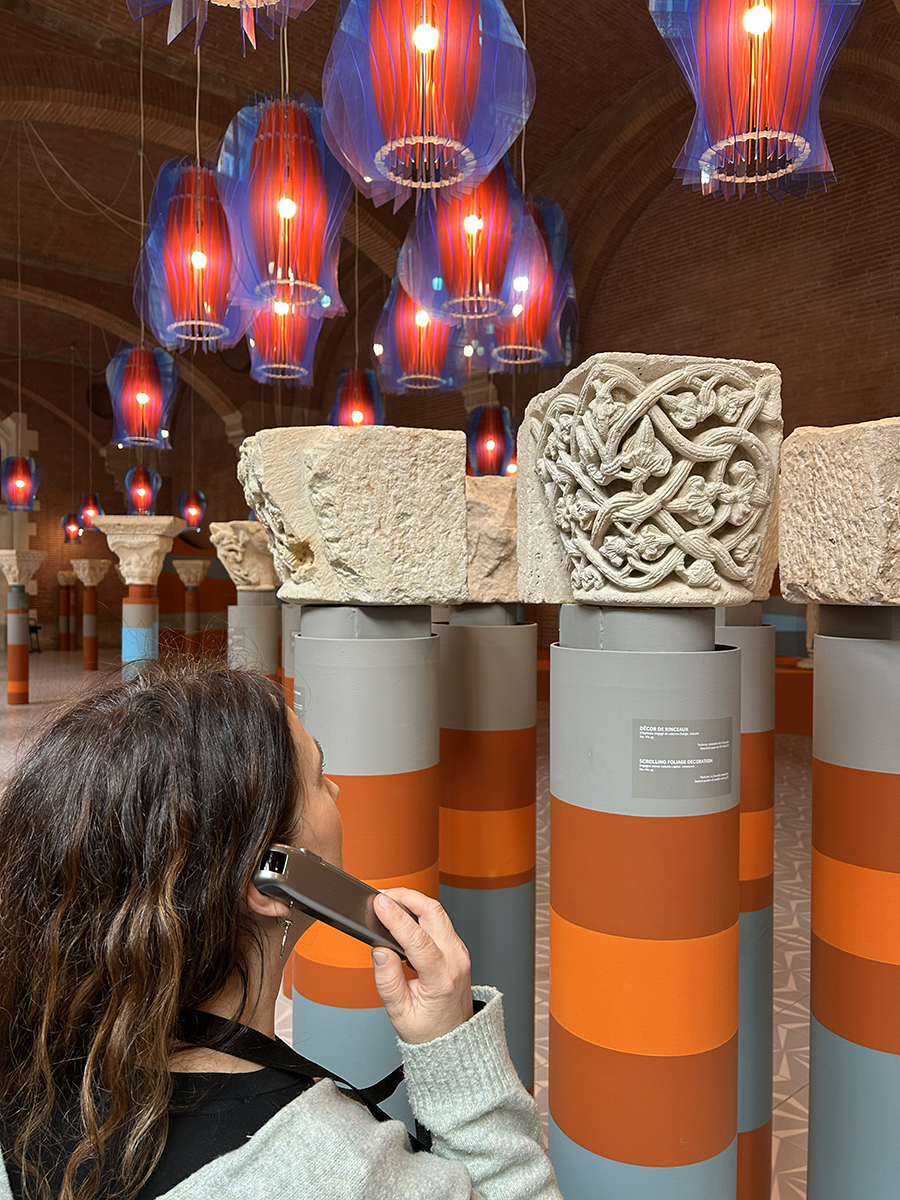
L’audioguide
Le musée propose un audioguide gratuit. Les différentes pistes comportent de courtes descriptions des œuvres, favorisant leur accessibilité à tous les visiteurs.
Prêt de matériels spécifiques
Le musée met gratuitement à votre disposition, sur demande à l’accueil :
- 4 fauteuils roulants
- Audio induction loops
Des sièges pliants sont en libre accès dans l’ensemble du parcours de visite.
L’équipe du musée des Augustins s’engage à développer une programmation culturelle inclusive.
Ateliers et activités adaptés, visites sensorielles immersives, spectacles accessibles : une offre pensée pour répondre aux besoins de chaque public.
Grâce à des collaboration régulières, le musée soutient et accompagne des initiatives en faveur de l’inclusion, avec des projets dédiés aux publics spécifiques.
Retrouvez toute notre programmation culturelle : ici
Des visites adaptées pour les groupes de personnes à besoins spécifiques peuvent être organisées sur demande (avec audiodescription, sensorielle, simplifiée, interprêtée en LSF).
La réservation est obligatoire pour toutes les visites en groupes.
Pour tous renseignements et réservations, nous contacter par mail à reservation.augustins@culture.toulouse.fr
Pour les visites de groupes en LSF, l’interprétation en langue des signes est à la charge du groupe.


