


History of the convent
The saga of Toulouse’s Augustinian monks
It’s no mean feat recounting over 500 years of the existence of a place and its inhabitants. With that in mind, we’ve selected a few key moments in the rich history of the Convent of Les Augustins – now a museum – to share with you here.
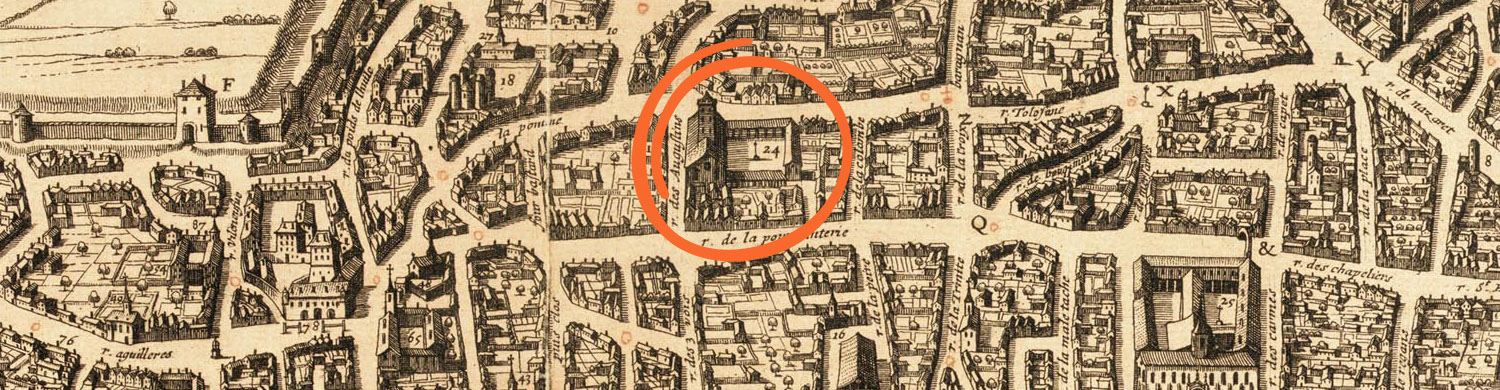
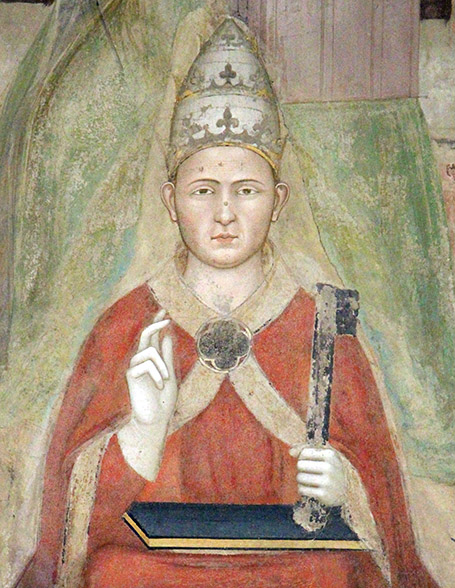
Clement V, the pope who granted permission for the convent’s construction
Part of a fresco by Andrea di Bonaiuto in the Spanish Chapel at Santa Maria Novella, a Dominican convent. Florence. 14th century.
Photo: Wikimedia Commons – Author: Sailko – Licence Creative Commons Attribution 3.0 Unported
A turbulent move
The history of the Convent of Les Augustins began, symbolically at least, in January 1310, when Pope Clement V granted the Order of Hermits of Saint Augustine permission to move the convent inside the city walls, to the Cité neighbourhood: Toulouse’s most densely populated area. They had been based in the Matabiau district since 1274. Their much sought-after new location was within the parish of Saint-Étienne, which took a very dim view of the arrival of another mendicant order reliant on public charity. The provost and the chapter of Saint-Étienne even took legal action against the Augustinian Hermits. The case was settled amicably 17 years later, in exchange for 3,500 livres tournois and an annual parochial fee of two gold florins: a huge sum of money at the time.
Construction begins apace…
The dispute did nothing to discourage the Augustinian Hermits, who quickly began building their convent. The work began under the supervision of Jean de Lobres, project manager of Toulouse’s Saint-Étienne Cathedral. They inaugurated the premises as early as 1341, and a general meeting of the Order was held in the convent. By this time, four bays of the church had no doubt already been built, along with the bell tower, the chapter rooms and the first gallery of the cloister. The full set of galleries surrounding the main cloister was completed by the late 14th century. At that time, over 100 monks lived, worked and prayed in the convent.
… with a few hiccups over the centuries
On 7 May 1463, Toulouse’s inhabitants became the victims of a major fire that tore through the city centre. It started in a bakery in the Carmes neighbourhood and blazed for 12 to 15 days, fanned by a strong vent d’Autan, the local south-easterly wind (ref: Municipal Archives), and eventually destroyed almost two-thirds of the city. We have no evidence that the convent was damaged, but the church’s construction appears to have slowed somewhat. The church – a fine example of Southern French Gothic style – is organised around a wide single nave, without a transept or side aisles, opening onto an apse with three chapels. It was finally consecrated on 30 June 1504.
In 1542, against a backdrop of fierce religious tension, the Convent of Les Augustins was sacked: rare books from the library, archives, almost all linens, furniture and precious objects were plundered, and never recovered.
On 14 September 1550, lightning struck the bell tower, destroying the spire and the upper floors, which were never rebuilt.
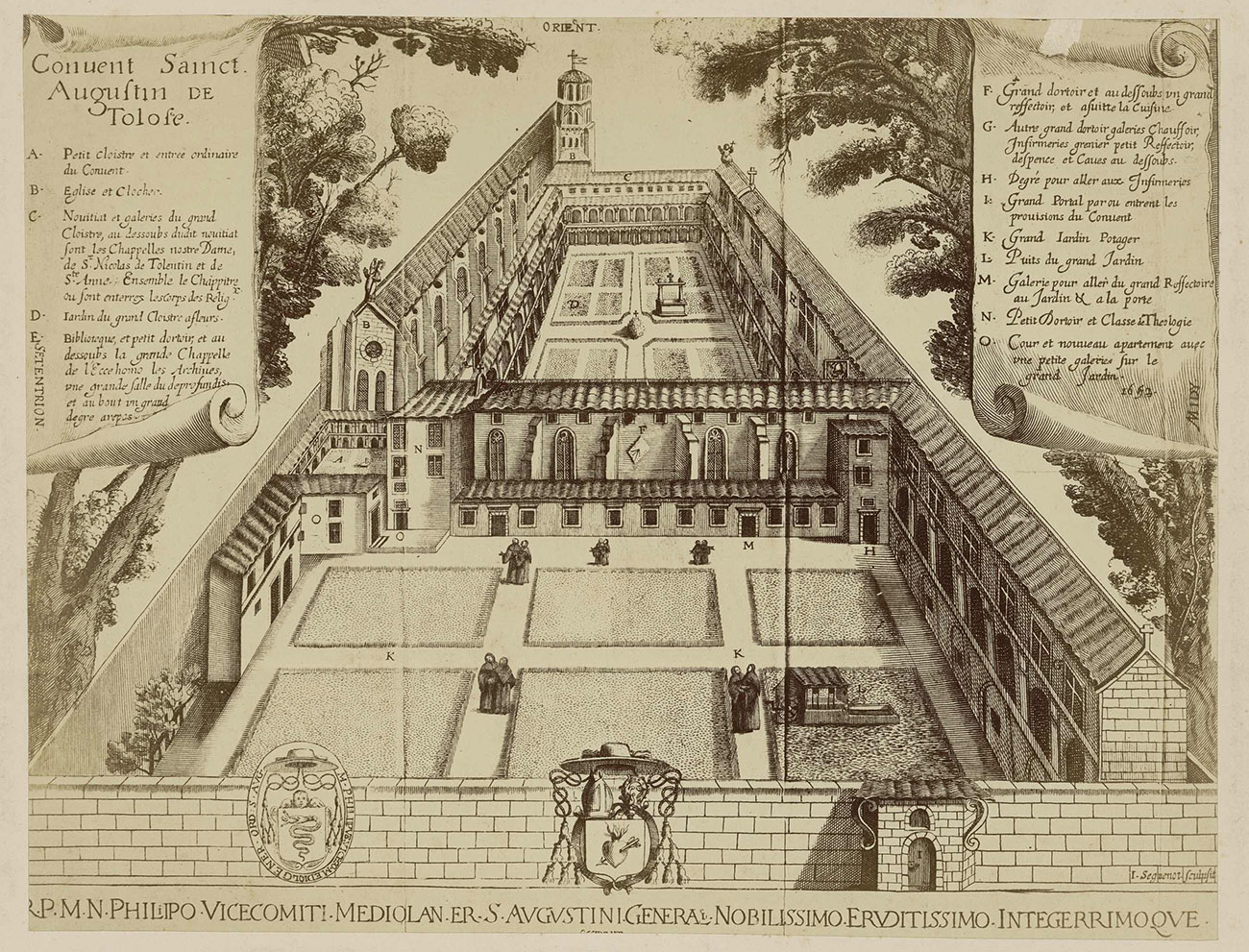
Cavalier projection of the Convent of Les Augustins, 1653
Image of a detailed plan of the Convent of Saint-Augustin, engraved by Joachim Séguenot in 1653.
City of Toulouse, Municipal Archives. Classification number: 26Fi146
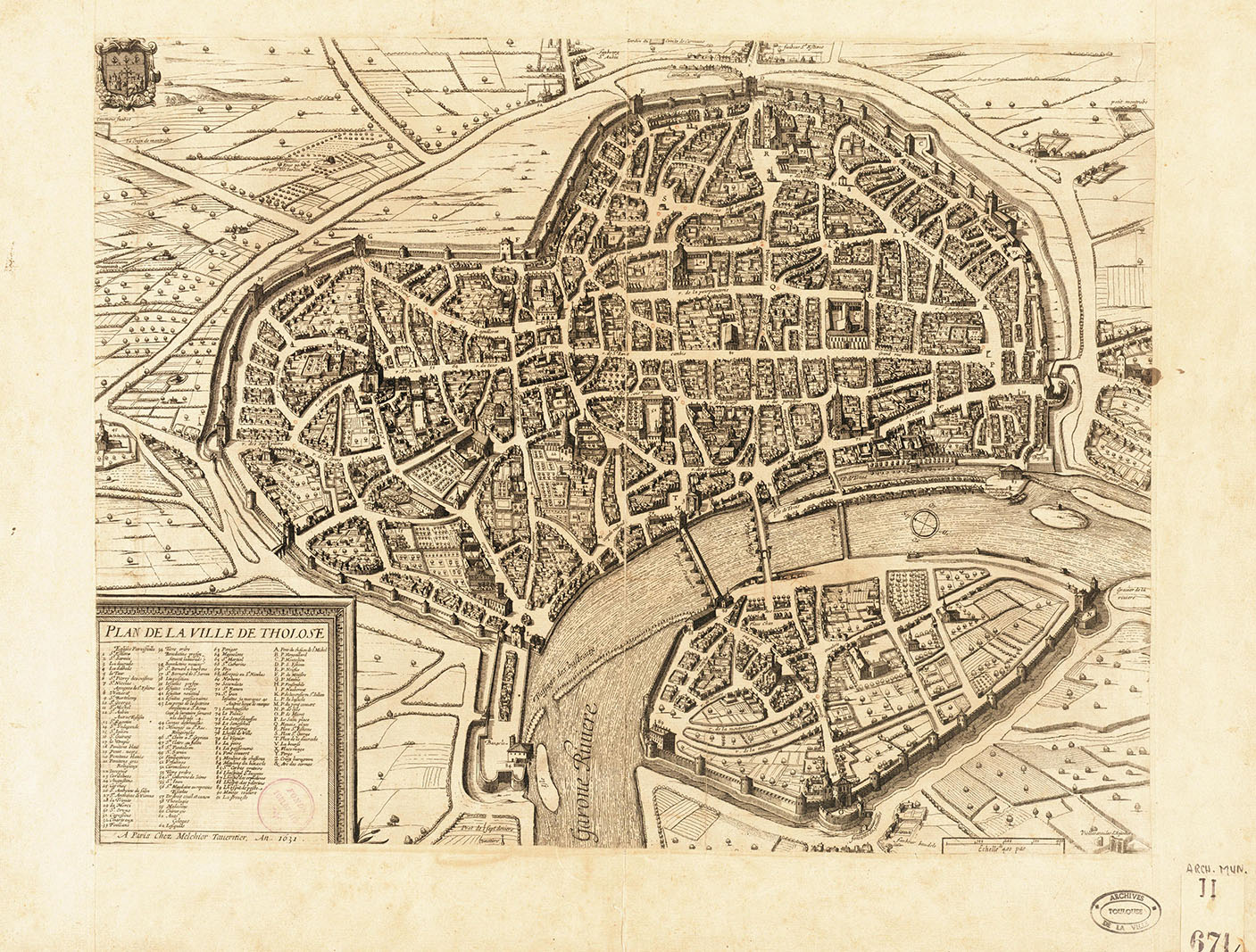
Map of Toulouse in 1631 by Melchior Tavernier
City of Toulouse, Municipal Archives. Classification number: ii 671.
This map, drawn around the time of the 1628–1631 plague outbreak, lists the main buildings, including :
12 parish churches,
9 other churches,
24 establishments for monks,
16 establishments for nuns !
Decline and renewal in the 16th and 17th centuries
Religious orders abounded in Toulouse, taking up a vast amount of space, despite their ever-falling numbers. The growing pushback from the general public against this pressure on the available land, coupled with the rise of Protestantism and the violence of the religious wars, go some way to explain the difficulties encountered by the religious orders in the 16th century.
The resources of the Convent of Les Augustins were dwindling, while its reputation was tarnished by a spiritual and moral laxity that fuelled Toulouse’s gossip mills and attracted the interest of the courts.
The number of brothers at the convent fell from 140 at the start of the 16th century to just 60 in 1649, and just a handful remained at the time of the French Revolution.
Although their numbers were gradually shrinking, a number of construction projects were undertaken in the early 16th century to improve the brothers’ living conditions: a second floor was created to house dormitories, for example, served by upper galleries built around the cloister. In 1626, a small Renaissance-inspired cloister was constructed to serve as a parlour for the brothers. The convent remained an important centre of learning and artistic patronage.
An artist at the convent
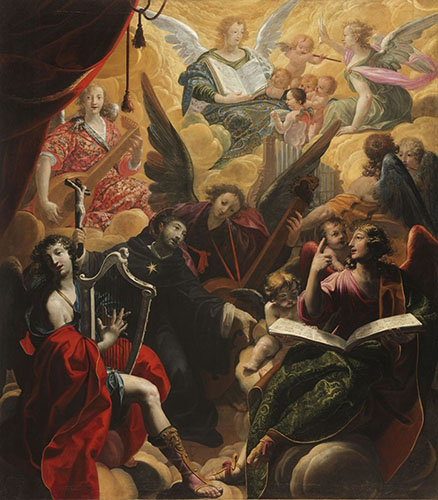
Ambroise Frédeau (1589–1673) joined the Order of Hermits of Saint Augustine in 1640. Frédeau, a student of Vouet and himself the master of Jean-Pierre Rivalz, produced many works for the convent.
The museum holds 17 of these paintings and sculptures, including this work depicting Saint Nicholas of Tolentino with a concert of angels.


