

The museum’s metamorphosis
A revamped museum and a brand-new visitor experience
The museum partially reopened on 19 December 2025, with redesigned spaces and an enhanced visitor experience to better welcome you.
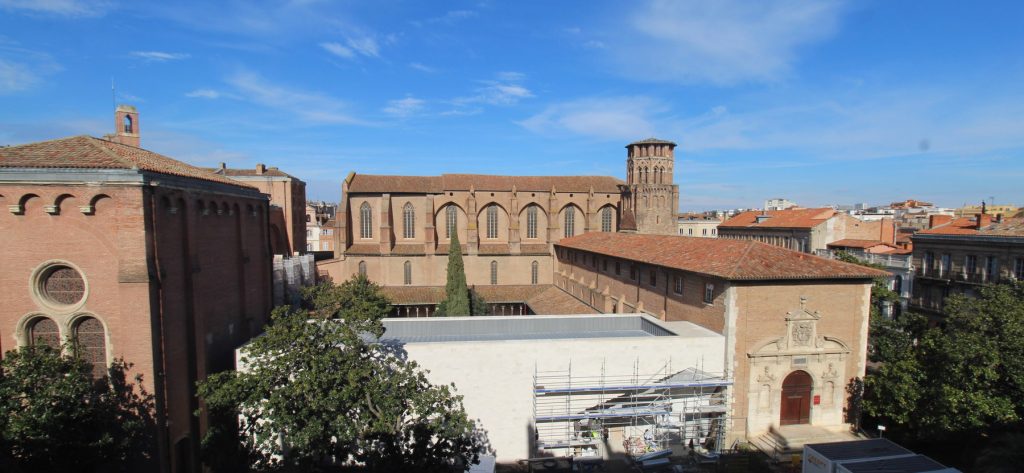
The museum is currently open on a limited basis.
The following will gradually reopen to the public:
- The church and the Gothic halls from autumn 2026
- The Great Cloister in its complete form in spring 2027
A new, modern entrance, accessible to all
The grand staircase at the centre of the museum was originally designed by Eugène Viollet-Le-Duc to provide access to the floor accommodating the painting galleries. It was extensively redesigned and expanded by Denis Darcy, who supervised its construction after Viollet-Le-Duc’s death.
Today, this exceptional piece of heritage is receiving the finest care. The bannisters and moulding are being restored, and the steps are being cleaned.
The museum has a new entrance pavilion designed by the Portuguese agency Aires Mateus, offering an authentic connection between modern architecture and the historic buildings.
Located on Rue de Metz and opening onto a green piazza, the new entrance is visible and convenient and meets the standards of the Musées de France network, delivering step-free, non-discriminatory access to the cloister.
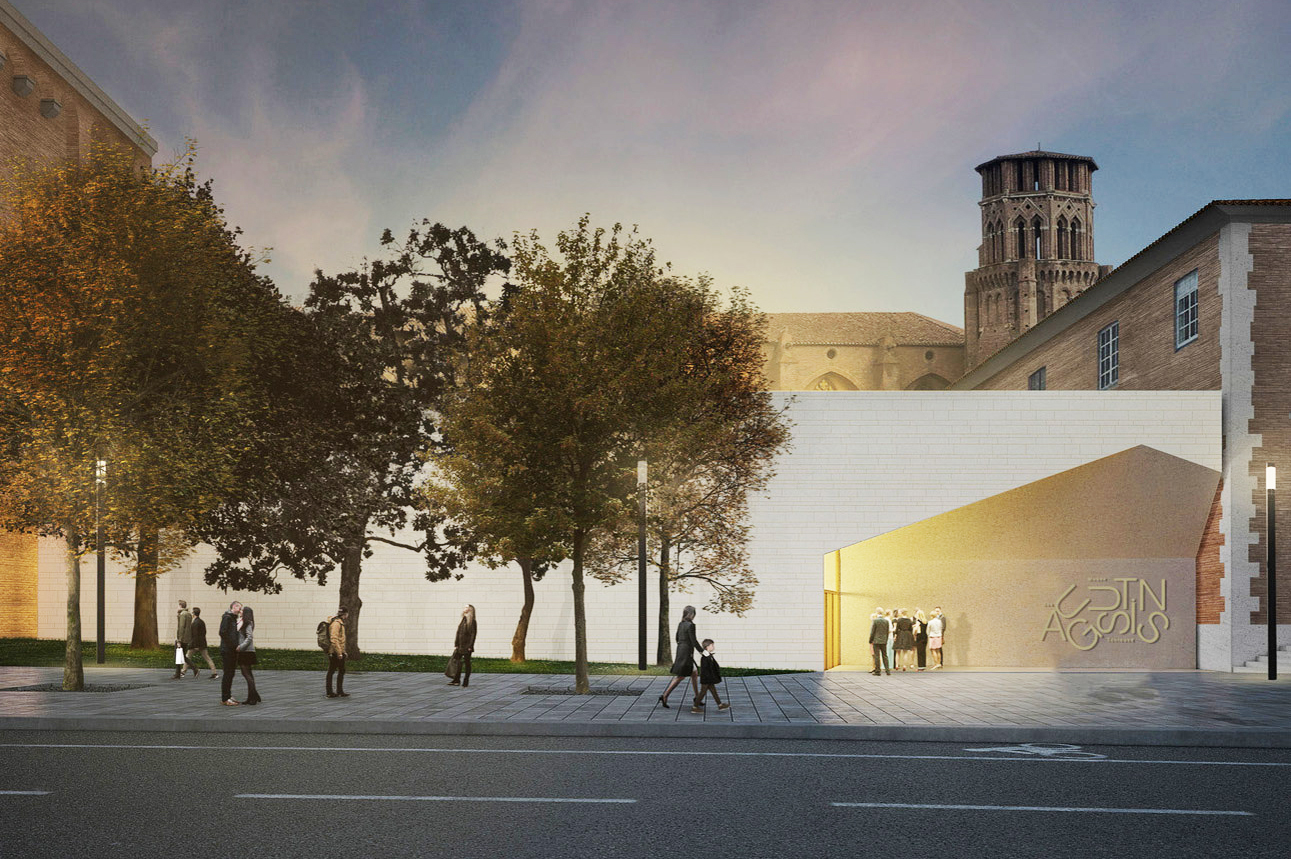
The piazza : a new green space right in front of the museum
The plans for a new entrance offered an opportunity to redesign the public space in front of the museum. It is now a multifunctional area that can be used as a recreational esplanade, while also providing space to manage crowd flow and present the museum’s cultural communications.
Gift shop and exit: a showcase at the corner of Rue Alsace-Lorraine and Rue de Metz.
Located at the intersection of Rue Alsace-Lorraine and Rue de Metz, the southern end of the museum’s 19th-century wing has large windows offering excellent visibility for the museum at the Esquirol crossroads.
The museum’s new gift shop , pleasant and thoughtfully designed, is located here to make the most of the traffic at this crossroads, which leads to two of Toulouse’s busiest shopping streets (Metz and Alsace). This is also where you can find our small café, serving light snacks.
The grand staircase at the centre of the museum was originally designed by Eugène Viollet-Le-Duc to provide access to the floor accommodating the painting galleries. It was extensively redesigned and expanded by Denis Darcy, who supervised its construction after Viollet-Le-Duc’s death.
Today, this exceptional piece of heritage is receiving the finest care. The bannisters and moulding are being restored, and the steps are being cleaned.
The main cloister is the only fully preserved 14th-century cloister in Toulouse and even in a sizeable area of south-west France.
It was showing worrying signs of disrepair. A comprehensive assessment carried out in 2021 uncovered major defects and structural problems, detrimental to its proper conservation :
- Warped and cracked roof timbers ;
- Roofing too old to remain watertight;
- An ineffective rainwater drainage system.
As a result of damp, the surface of the marble columns and stone decorative elements is crumbling, and the low walls surrounding the garden are deteriorating.
A few cracks may even compromise the stability of the columns. Restoration work on the colonnades is currently underway. The part of the cloister where work is currently taking place is not open to the public.
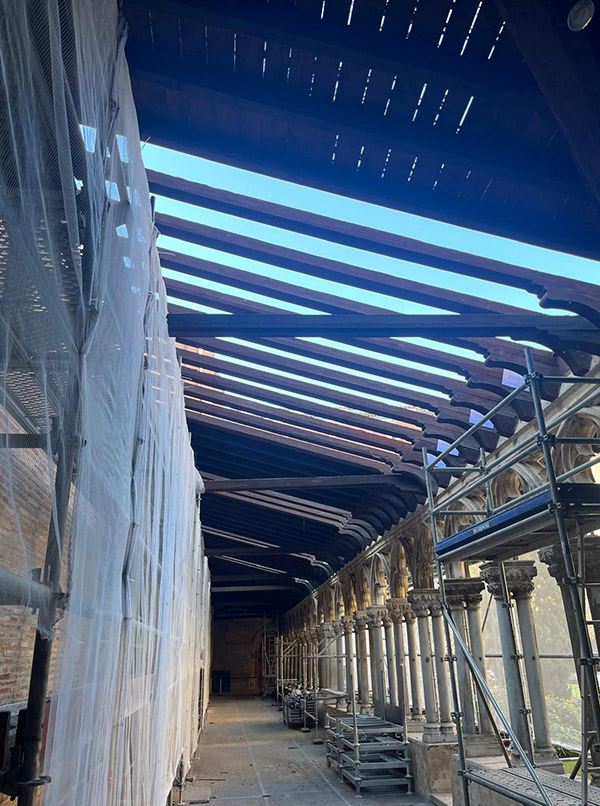
Photo musée des Augustins / GP
On the ground floor: Interior accessibility (2019–2020)
Initial accessibility work was carried out inside the building in 2019 and 2020, requiring the museum’s closure. The efforts made in the 2010s to improve accessibility for persons with reduced mobility still did not make it possible for them to visit the museum in its entirety – the painting galleries remained off limits, for example.
Keen to obtain access accreditations (Destination pour Tous, Tourisme et Handicap) for its main sites, the city financed a range of new adaptations throughout the building. With the support of the city hall’s Disabilities services, the museum is committed to providing universal accessibility for its visitors, with the primary aim of ensuring independence for all by:
- Making the hall between the Romanesque Sculpture Gallery, the two cloisters and the upstairs galleries accessible by means of two lifts ;
- Installing access ramps to the small cloister, the church and the Gothic sacristy area ;
- Revising the lighting for the monumental staircase ;
- Installing additional accessibility features in all served areas, with tactile warning strips, handrails, lighting, and more.
On the second floor : the refurbishment of the glass roofs in the painting galleries (2018–2022)
After more than 110 years in existence, the upper and lower 19th-century glass roofs crowning the galleries on the second floor were no longer watertight or airtight and were not letting in sufficient light. These historic glass roofs urgently needed restoration.
The restored glass roofs will allow visitors to view the masterpieces displayed here in a new light, returning these two spacious galleries to their former splendour. The HVAC system also eliminates wide variations in temperature in these spaces, which are detrimental to the works, the general public and the staff.


