

Introduction to Les Augustins
Singular exhibition spaces
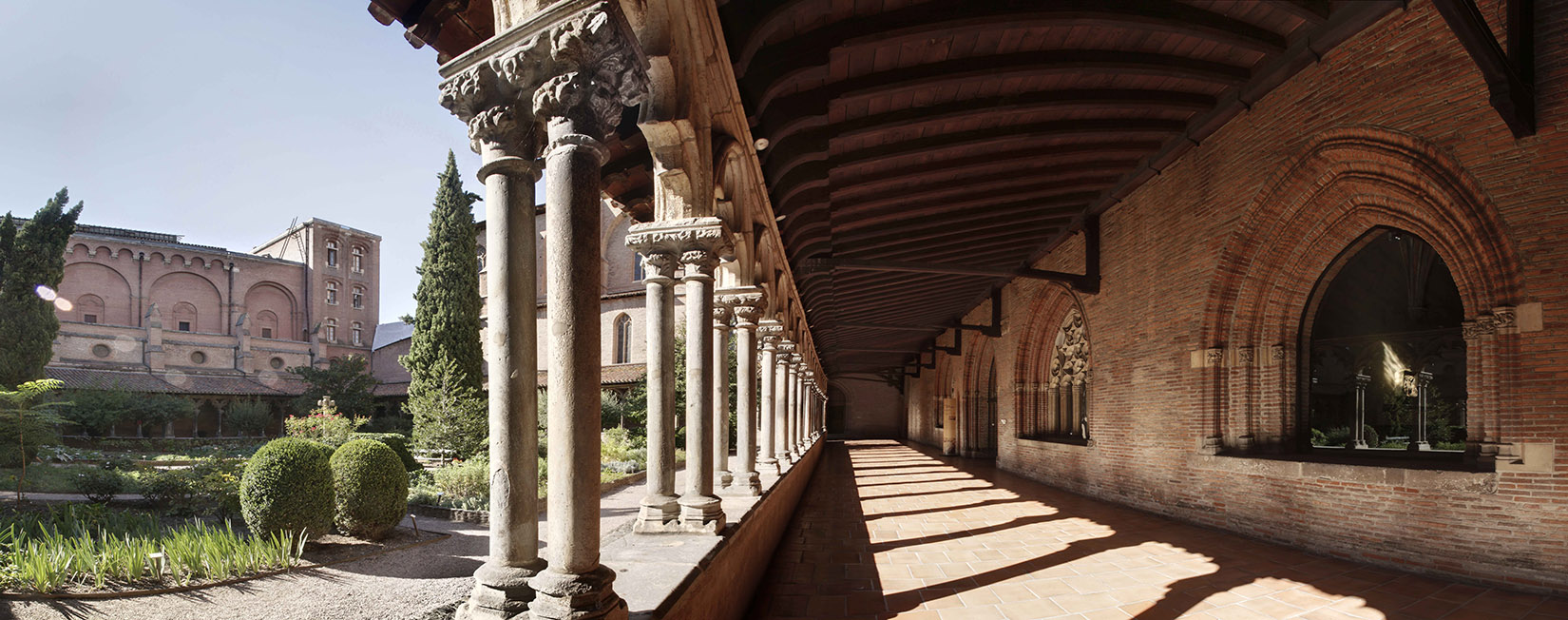
The museum took up residence in a former medieval convent, and has therefore had to adapt to spaces designed with very different uses in mind. This unique feature is also a strength, however, as the visitor is invited to discover eclectic, contrasting exhibition areas. The Musée des Augustins buildings are collectively classed as a Historic Monument.
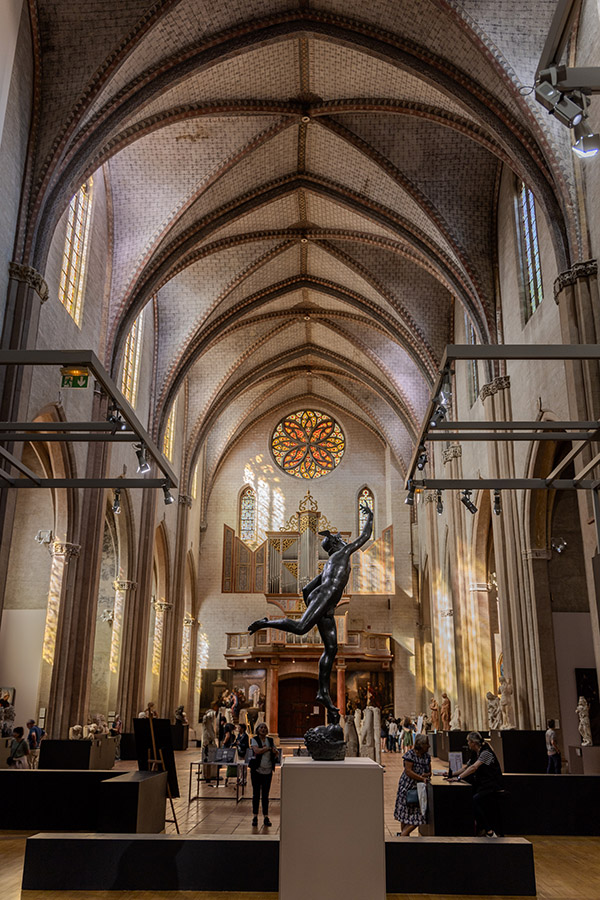
The museum’s church
Mairie de Toulouse – Photo Patrice Nin.
The Church
More than any other part of the museum, the church bears witness to the building’s initial purpose, making it a powerful setting in which to narrate the Musée des Augustins’ past, present and future in the city. It was the sole exhibition space when the museum first opened.
Paintings and sculptures rub shoulders, and works from Toulouse and Europe hold court. The church is, first and foremost, the perfect place to display the large altar paintings – one of the Musée des Augustins’ specialities. Upon opening in 1795, the Muséum provisoire du Midi de la République (the French Republic’s temporary museum of the Midi region) in fact displayed 69 paintings from the convents and churches of Toulouse, recovered after being seized during the French Revolution, and numerous objects and sculptures from antiquity to the contemporary era.
The Cloisters
The main cloister, completed in the late 14th century, was used by the museum as an open-air gallery during the 19th and 20th centuries. To ensure the proper conservation of the artworks, it is no longer used in this way. Nonetheless, it remains the beating heart of the building: it is the first area visitors discover once they leave the entrance hall, something which never ceases to surprise. It also leads to each of the museum’s wings, providing access to the various exhibition spaces. The garden, much loved by the general public, has changed over the years, shifting from naturalistic park to formal lawns. It was redesigned as a medieval-inspired garden in 1995.
The small cloister, isolated for many years, was opened up onto the main cloister in 2021, as was the case in the past. Built in the 17th century, the small cloister was used as a parlour for the Augustinian brothers. It was used as an exhibition space, too, but also housed the caretaker’s lodge and the École des Beaux-Arts in the 19th century.
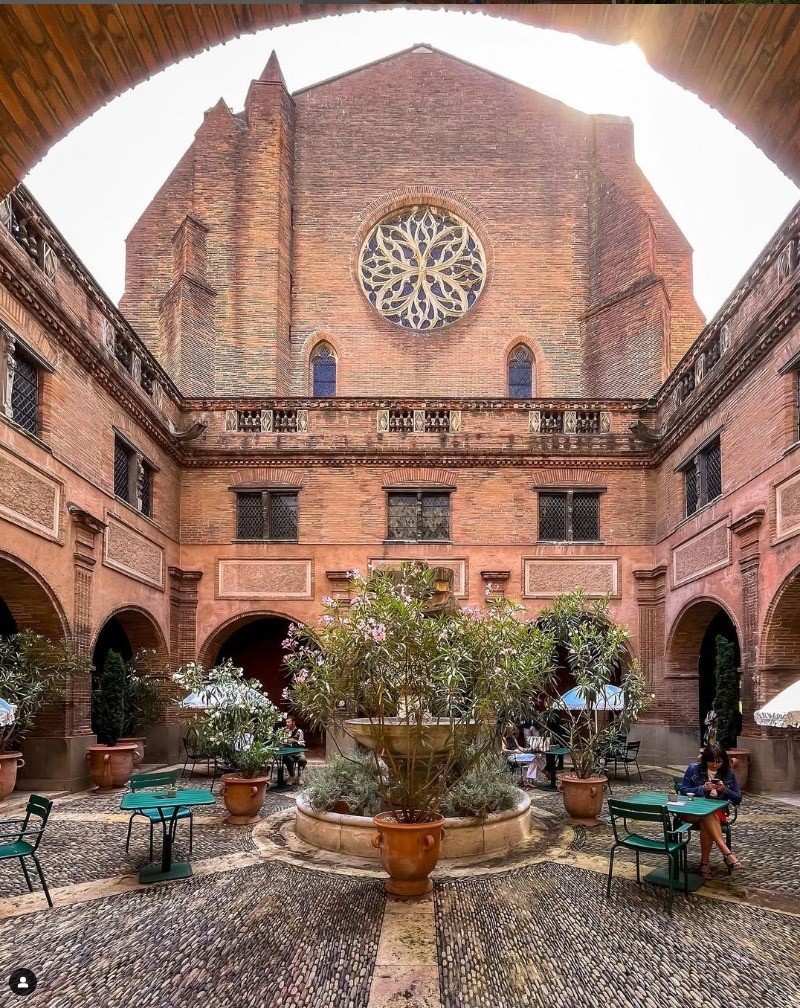
The small cloister
The small cloister during the summer 2023 opening.
Photo © Rémi Deligeon
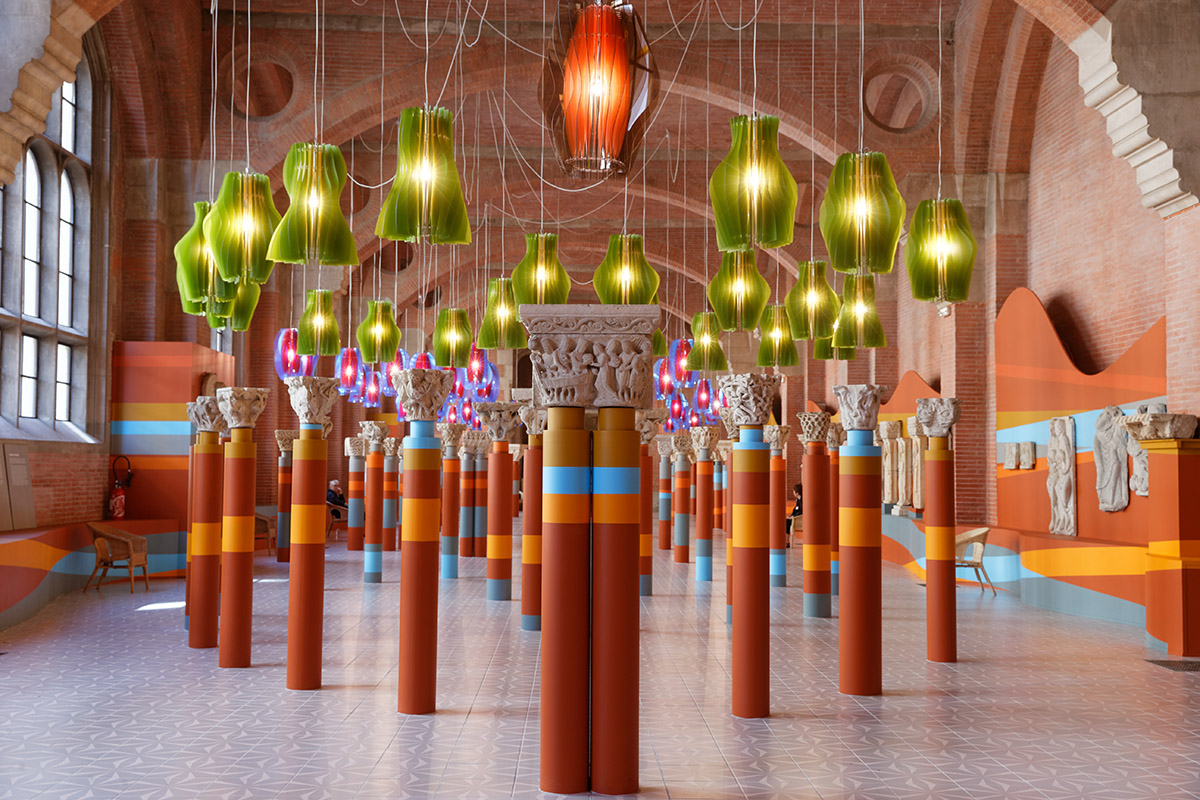
The Romanesque Sculpture Gallery
The Saint-Sernin cloister collection with overhanging green lamps.
Mairie de Toulouse – Photo Patrice Nin.
The Romanesque Sculpture Gallery
The Romanesque Sculpture Gallery houses one of Europe’s largest collections of column capitals, originating from three major monuments in Toulouse: La Daurade, Saint-Sernin Basilica and Saint-Étienne Cathedral. This gallery forms the ground floor of the wing built in the late 19th century by Eugène Viollet-le-Duc and his student Denis Darcy.
Jorge Pardo’s 2014 art project presented a unique opportunity for the Musée des Augustins to reenvision this gallery. Jorge Pardo has become something of an expert in the art of museum exhibition design, as can be seen in his Mesoamerican galleries at LACMA.
The project juxtaposes the artist’s inimitable signature style with the power of the art of the Romanesque sculptors. The exhibition design turns the spotlight on a collection whose exceptional character too many people in Toulouse have forgotten, and marks an important milestone in the museum’s history.
The Gothic Galleries
The majority of the museum’s Gothic sculpture collection spans the period between the 1200s and the early 14th century. The preserved convent rooms (the chapter house, sacristy, and Notre-Dame de Pitié Chapel), broadly contemporary in date (14th–16th centuries), provide the perfect setting for these works, many of which originate from buildings in Toulouse.
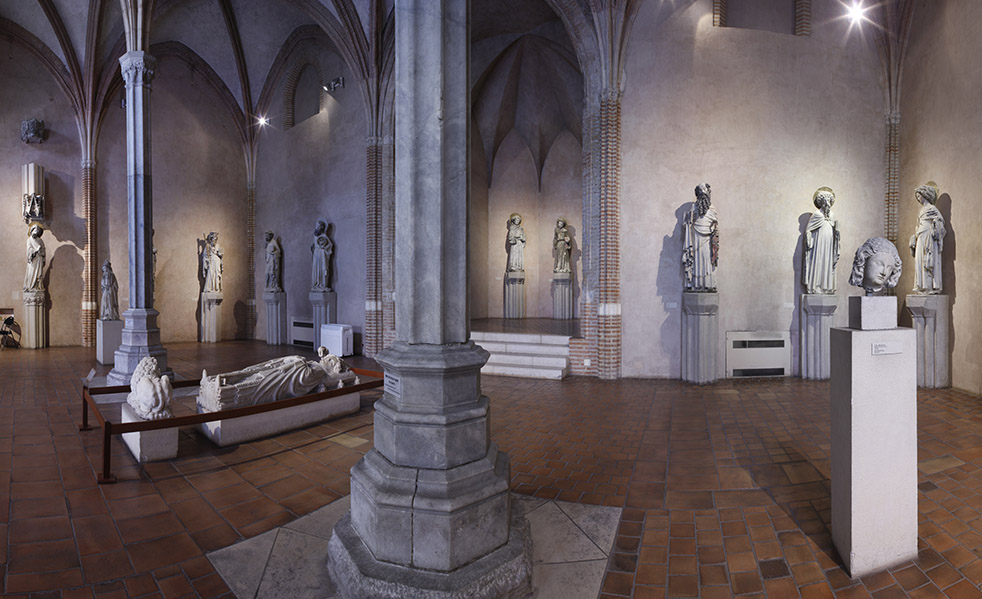
Notre-Dame de Pitié Chapel
Sculptures originating from Rieux Chapel (Toulouse, former Cordeliers Convent).
Mairie de Toulouse, musée des Augustins – Photo Daniel Martin
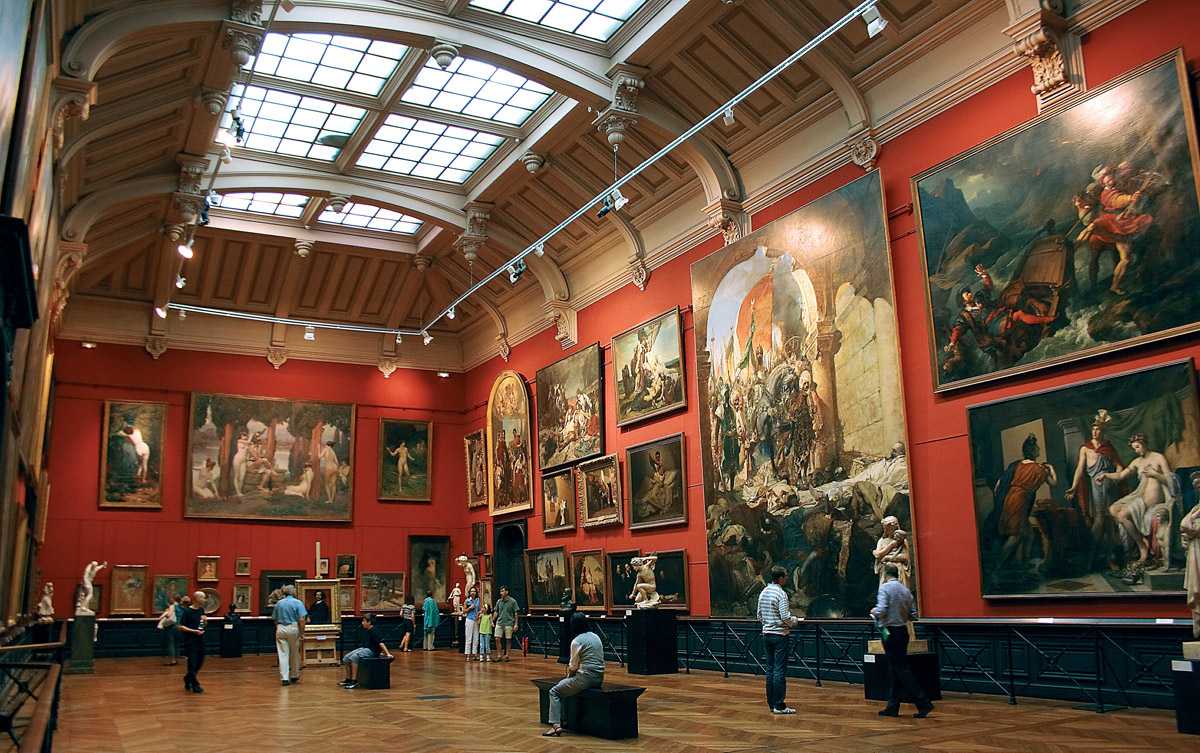
The Red Gallery
Exhibition design in 2018.
Photo © Jose Manuel Herrador
The Painting Galleries
The Painting Galleries can be found on the first floor of the 19th-century wing, the site of the convent’s former dining hall. The galleries once formed a single space, which was divided into two galleries in the 1980s. Designed in keeping with the architectural trends of the time, these galleries have high walls topped with a glass roof, guaranteeing the brightest light. These walls are even higher than usual at the Musée des Augustins, culminating at 11 metres.
Another small painting gallery on the same floor offers a more intimate visitor experience.
To reach these rooms, visitors can take two staircases, including Denis Darcy’s exceptional monumental staircase. Following work to improve accessibility, a lift now serves the galleries


