
History of the museum
From convent to museum
The museum opened almost 250 years ago. We’ve selected a few key moments in its long and rich history to share with you.
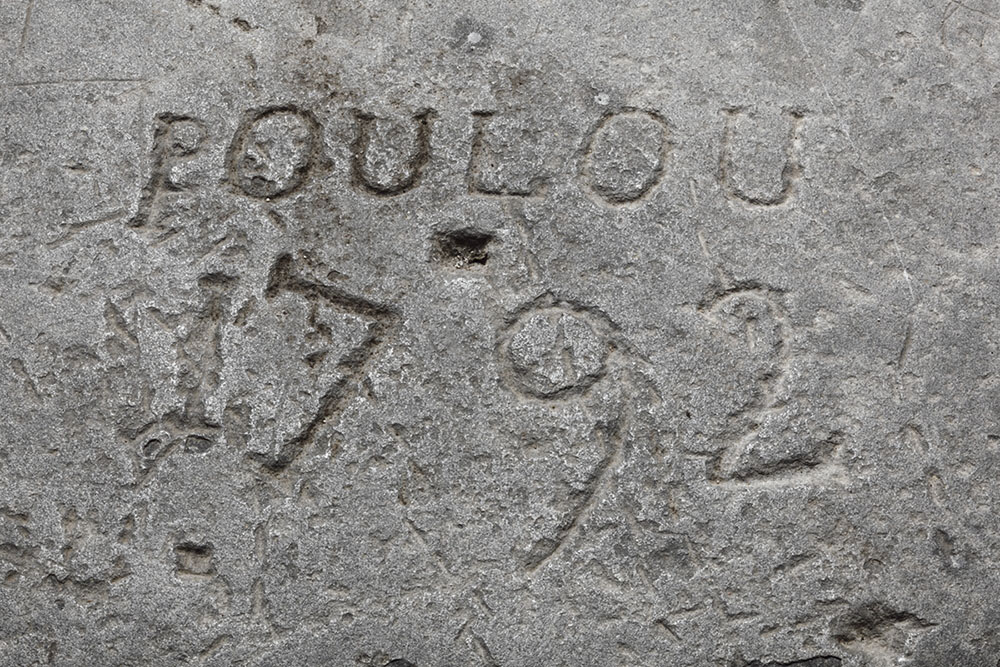
Revolutionary graffiti: Poulou woz ere !
An example of graffiti dating back to the French Revolution etched into the museum’s main cloister: Poulou 1792.
Toulouse, musée des Augustins – Photo Daniel Martin
A forerunner
The French Revolution brought an end to the convent’s religious activities. It became a national asset on 2 November 1789, and was deconsecrated and divided up in 1790 during the suppression of the monastic orders. The county council decided to create a Muséum provisoire du Midi de la République, the French Republic’s temporary museum of the Midi region, in 1793. Located in the Church of Les Augustins, it didn’t open until 27 August 1795 (10 Fructidor, Year III in the French Republican calendar), only shortly after the Louvre. This makes the Musée des Augustins one of the oldest museums in France.
The 19th century: from the Temple of the Arts to the Viollet-le-Duc wing
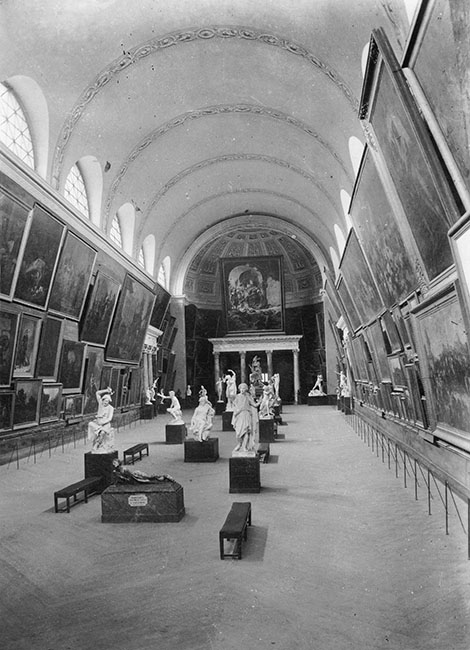
Around 1830, the municipality had the far end of the church’s choir and several Gothic chapels on the Rue des Arts demolished. It also enlisted the help of architect Urbain Vitry to design the “Temple of the Arts” in the church: this neoclassical-inspired stucco monument completely hid the Gothic structure. At the same time, Alexandre Dumège moved the medieval and ancient sculpture collections into the cloister galleries.
In the late 19th century, several parts of the convent, the south wing and the dining hall were destroyed and the École des Beaux-Arts moved to new premises. Along Rue Alsace-Lorraine, a new wing in an eclectic style was designed by Viollet-le-Duc and executed by his student Denis Darcy: the plan for a “new museum” with two wings was taking shape, although only one wing would eventually emerge.
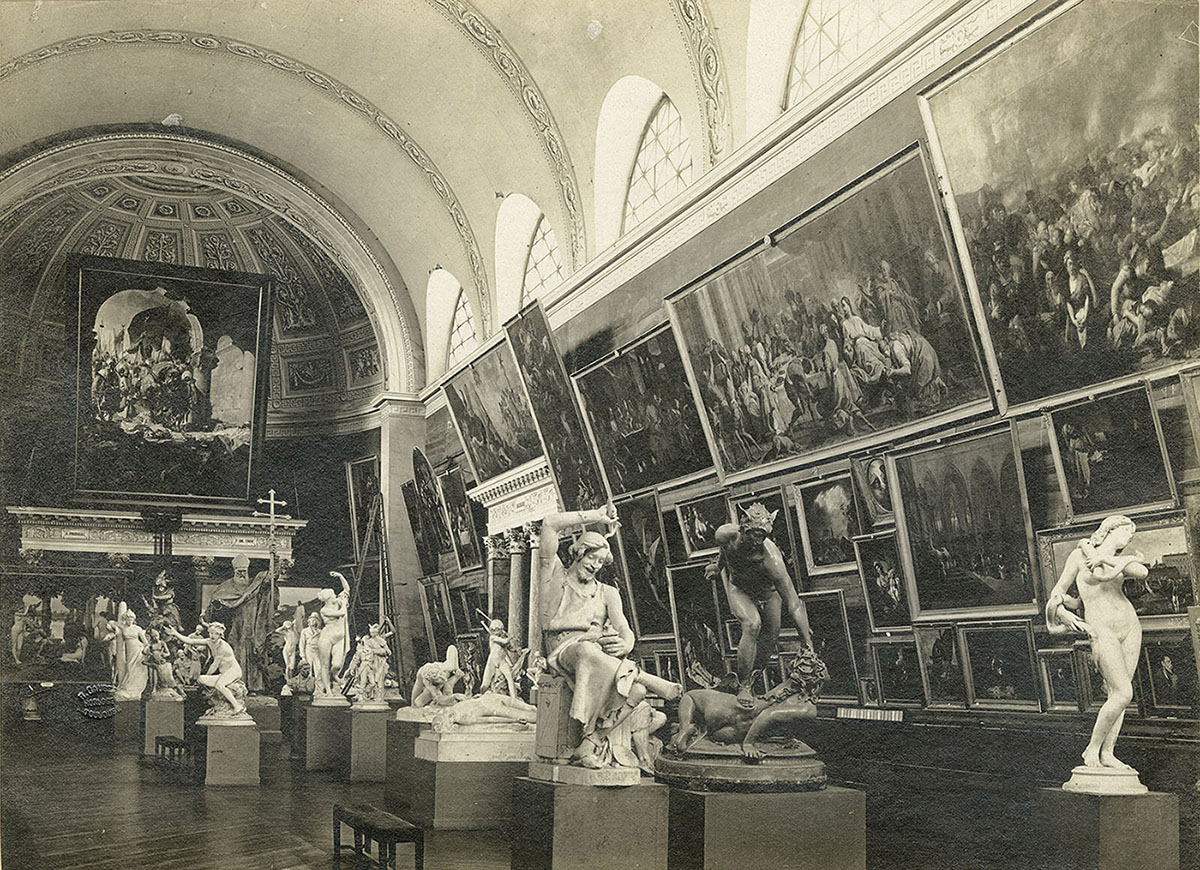
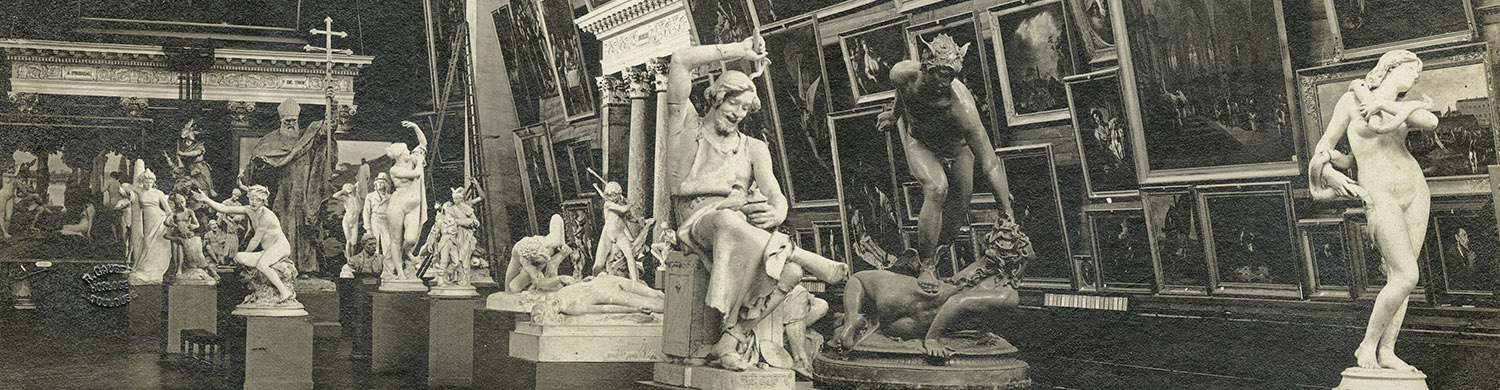
The Temple of the Arts
View of the inside of the museum’s church, converted into the Temple of the Arts.
Toulouse, Musée des Augustins archives.
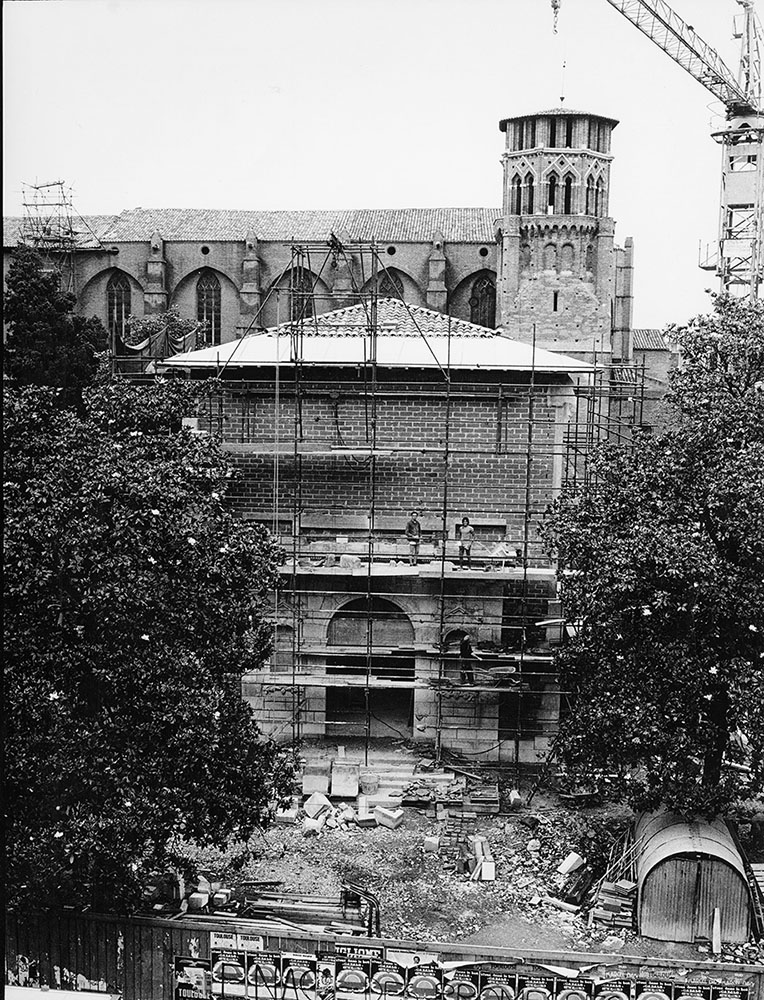
Construction of the entrance pavilion
Construction of the Boiret Pavilion, which would become the entrance to the museum in 1980.
Photograph: Atelier municipal de photographie, City of Toulouse. Musée des Augustins archives, Toulouse.
The great 20th-century restoration
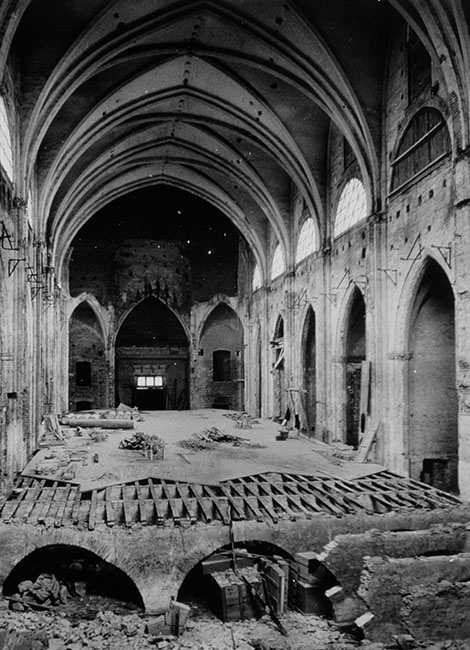
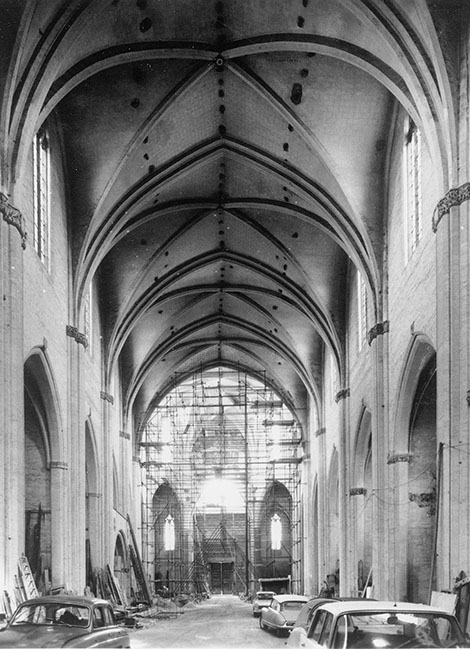
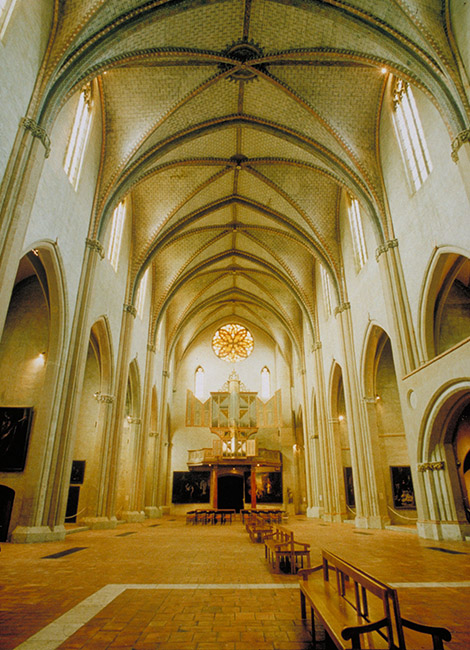
In 1941, concrete efforts were undertaken to restore and conserve the architectural heritage. The decision was made to remove the Temple of the Arts, with the work beginning in 1950. Chief architect Stym-Popper returned the rose window to the western façade. The choir’s vaulted ceiling and the side chapels and windows were restored. When Denis Milhau took over from Paul Mesplé as director of the museum, they decided to completely overhaul the museum. After Stym-Popper’s accidental death, Yves Boiret took the reins. A great many projects were undertaken, including numerous excavations, the restoration of the walls of the Gothic galleries, the levelling of the cloister garden, and, on the upper floor of the 19th-century wing, the division of the main gallery into two and the creation of a mezzanine. Last but not least, facing Rue de Metz, the only addition made was the new entrance, incorporating reused decorative elements from the former chapelle des Pénitents noirs (chapel of the Black Penitents). The museum opened in two phases, in 1980 and 1981.
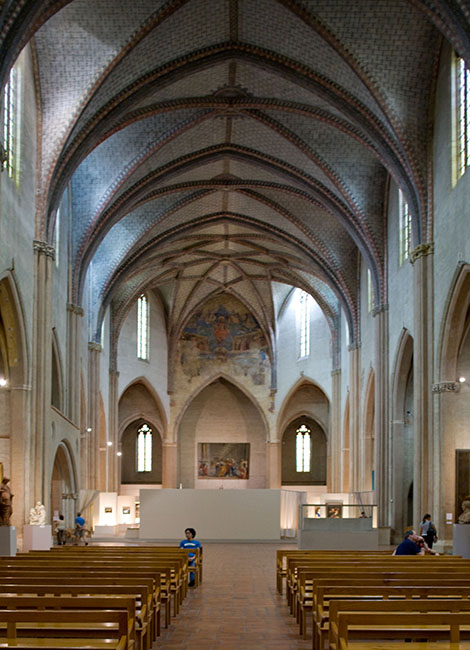
The church over the years
These images show the changes this singular exhibition space underwent between the 19th and 20th centuries, while awaiting the latest exhibition design.